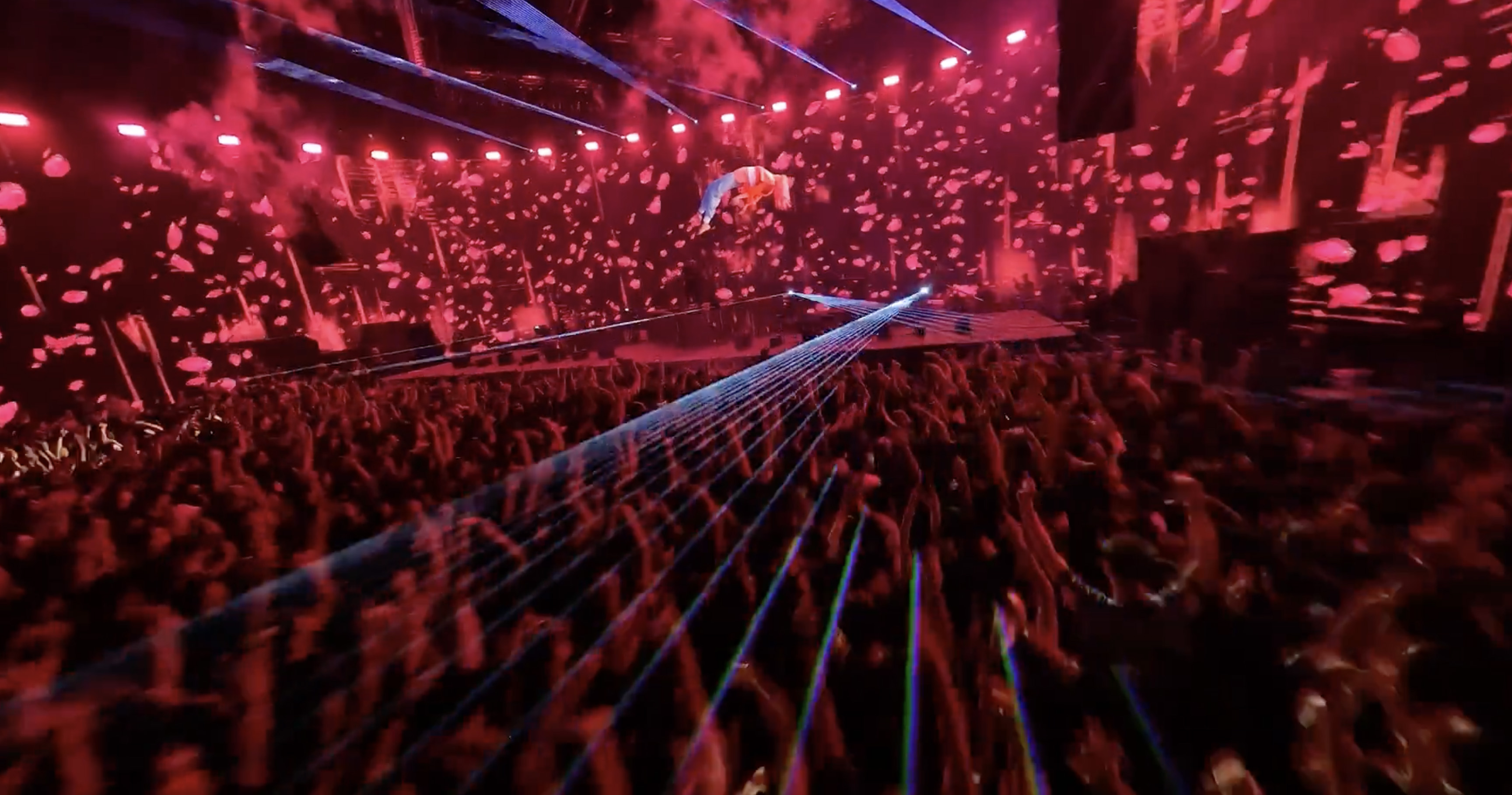
If you have ever watched a drone shot weave through a stadium full of fans, dive past a stage, and rise above a sea of phone lights in a single take, you have seen what FPV can do. If you have watched a slow, smooth flyover of a property or a sweeping aerial of a coastline, that is traditional drone work. Both are aerial cinematography. Neither is better than the other. They just answer different creative questions.
This guide breaks down the practical differences so you can make the right call before you book a pilot or scope a project.
What is a traditional drone, exactly?
When most people picture a drone, they picture a traditional camera drone. Think DJI Mavic, Inspire, or Air series. These platforms are built for stability, long flight times, and smooth, predictable movement. They hover. They glide. They hold focus on a subject from far away while a gimbal keeps the horizon level no matter what.
Traditional drones are workhorses. They are perfect for:
- Real estate exterior aerials
- Property mapping and surveying
- Wide establishing shots for film and TV
- Slow, cinematic flyovers
- Live event coverage from a safe distance
The strength of a traditional drone is also its limitation. It moves smoothly because it is built to be safe, predictable, and stable. That makes it the wrong tool when you want footage that feels alive.
What is an FPV drone?
FPV stands for First Person View. The pilot wears goggles that show a live feed from a camera mounted on the drone, and they fly it like they are inside it. The drones themselves are smaller, lighter, and far more agile than traditional platforms. They can roll, dive, accelerate from zero to fifty miles per hour in a few seconds, and squeeze through gaps a Mavic could never approach.
That maneuverability is what makes FPV cinematic. Instead of watching a scene from a distance, the audience feels like they are moving through it. The shot does not just observe. It participates.
FPV is the right tool when you want:
- One-take flythrough sequences (factory floor, restaurant, venue)
- Concert or live event hero shots
- Brand and commercial work that needs to stop the scroll
- Real estate listings that stand out from competitors
- Action sports and high-speed chase shots
- Anything that needs to feel immersive
Side by side: the practical differences
Movement
Traditional drones move on smooth curves and straight lines. FPV drones can roll, flip, dive, climb, and accelerate in any direction the pilot wants. If the shot calls for a sense of speed, weightlessness, or three-dimensional movement, FPV is the answer.
Indoor work
Most traditional drones are too large and too unforgiving to fly indoors safely. FPV drones come in small, lightweight versions called cinewhoops that can fly through doorways, around furniture, and between people. This opens up shots that would be impossible with any other tool.
Camera quality
Both can shoot 4K and beyond. FPV drones often carry GoPros or dedicated cinema cameras like the DJI Osmo Pocket 3 or RED Komodo, depending on the build. The quality gap is closing fast.
Skill required
Traditional drones largely fly themselves. They have GPS, obstacle avoidance, and assisted modes. FPV drones do not. Every input is manual. The pilot is doing all the flying. That is why hiring an experienced FPV pilot matters far more than hiring an experienced traditional drone pilot. Bad FPV footage looks really bad.
Cost
FPV shoots are typically more expensive per day because the skill ceiling is higher and the prep work (custom builds, batteries, multiple drones for redundancy) is more involved. But you often need fewer setups to get the shot, which can balance out the day rate.
So which one do you need?
"If your shot needs to feel cinematic, immersive, or alive, you want FPV. If your shot needs to be smooth, wide, or surveying something from above, traditional drone is the right call."
And the best answer is often: both. Many of the productions I work on use a traditional drone for the establishing shot and an FPV drone for the hero moment. Each one does what it is best at, and together they make the entire piece feel polished and intentional.
What to ask before you book a pilot
- Are they FAA Part 107 licensed? Required for any commercial drone work in the US.
- Are they fully insured? Liability coverage protects everyone on set.
- Can they show recent work that matches your style? An FPV pilot who only flies racing tracks might not be the right fit for a wedding venue flythrough.
- Do they handle airspace authorization? A good pilot files for waivers and clearances when the location requires it.
- What is their backup plan? Do they bring multiple drones in case of a crash or technical issue?
If you are still not sure which approach fits your project, the easiest answer is to talk it through with someone who flies both. That conversation usually takes ten minutes and saves a lot of guessing.
Have a project in mind?
Tell me about what you are trying to capture and I will help you figure out the right approach. No pressure, no jargon.
Start a Conversation